
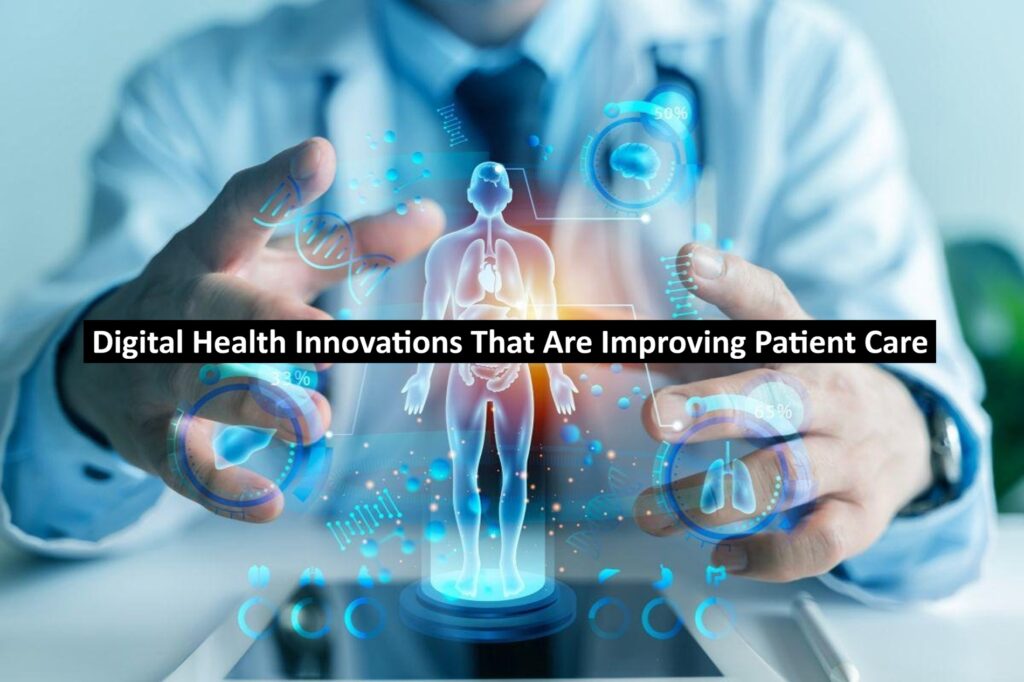
Digital health advancements have been redefining healthcare through the expansion of accessibility, effectiveness and the patient-centric aspect of medical services. Technologies like Artificial Intelligence (AI), telemedicine,wearable health devices, EHRs, and remote patient monitoring have all been aiding doctors in providing timely diagnoses, individualized treatments, and enduring care, while improving communication between doctors and patients.
As healthcare systems become more digitized, more and more health care institutions and research centers like clinics and hospitals are incorporating technological solutions to increase operational efficiency and to support preventive health.
Telemedicine Expands Access to Healthcare
Telemedicine provides access to medical professionals via video calls, phone consultations or through a secured website. Telemedicine offers greater access to healthcare professionals for remote populations by decreasing travel time and reducing overall health costs. Patients have access to everyday consultations, prescription refills and follow-up visits without ever going to the doctor’s office.
The advantage applies to healthcare professionals as well, with enhanced scheduling and more efficient resource use as potential benefits. Indeed telemedicine is quickly moving into mainstream healthcare, especially in chronic care and preventative medicine.
Read: Top 10 Most Expensive Baggy Jeans Worldwide
Artificial Intelligence Enhances Clinical Decision-Making
How can we help healthcare workers? By extracting, recognizing, processing and understanding medical imagery as a tool in providing decision support and insight. Advanced machine learning algorithms make these capabilities a reality by sifting through massive patient data volumes to predict future disease probability and deliver relevant treatments. Additionally, we have the ability to reduce diagnosis and care discrepancies and improve clinic work-flows.
While AI use in organizations goes beyond its use to diagnose patients, such technology will see the health care sector, particularly in radiology, oncology, cardiology, pathology and emergency room services use it to bring personalized care in the coming times since AI will soon be evolving much more.
Wearable Devices Support Continuous Monitoring
Wearable health technologies, including smartwatches, fitness trackers, and medical sensors, empower individuals to measure their heart rate, blood pressure, oxygen levels, activity patterns and sleep habits in real time. Continual health tracking enables a health professional to diagnose early stages of many illnesses, promotes a healthier lifestyle, and creates increased awareness of one’s own health.
Wearable devices also allow health professionals to remotely manage patients with chronic diseases, limiting the need for hospital visits and helping respond to a medical emergency more quickly.
Electronic Health Records Improve Coordination
In short, healthcare information technology enables electronic health records (EHRs), which give health care workers safe, accessible, remote (from where the patient records are kept) access to their patients health information, test results, prescriptions, imaging information, test results, and visit/treatment plans. EHRs enable more effective communication in healthcare and help avoid redundant tests as well as prevent or limit the number of medical mistakes that occur in the workplace.
A patient also gets better-coordinated care from all over the health care world by keeping it electronic. “When those files all have been digitized with secure access from a whole bunch of places that can also read and pull up that data the patient’s likely to get diagnosed more rapidly and certainly there’s more going into treatment plans,” explains Bynog.
Electronic medical records create a secure database that allows medical professionals to access information like medical records, test reports, and images, prescription orders and overall treatment plans for a specific patient. In healthcare settings with abundant amounts of clinical data, clinicians focus on information that is urgent, much like strategies for prioritizing information effectively as a student help learners organize complex information for better understanding and decision-making. Digital record keeping can also enhance provider communication, avoid redundant tests and lead to more rapid, informed treatment decisions.
Remote Patient Monitoring
Remote patient monitoring is a way that health providers can keep track of a patient’s health without being in the doctor’s office. It can be monitored through various medical devices that will be hooked up and sending health information automatically to the provider so that people recuperating from surgery or trying to manage conditions such as diabetes, heart disease, and high blood pressure can be continuously monitored.
This can minimize the need for re-hospitalization and at same time provide great opportunity to monitor patients to provide good quality health care services at home. Any change detected earlier could lead to quicker action to medical professionals to treat and prevent escalation of patient conditions.
Data Security and Patient Privacy
The growing use of digital healthcare necessitates the following measures to guard the information of the patients. It requires the following: “Organizations must use robust cybersecurity methods to create protected data in transit protocols, cloud storage and tightly controlled permissions.” Health information must continue following privacy laws.
Training health professionals in safe security measures only strengthens the defenses against data breaches and cyber-attacks further. Secure digital health environments are crucial to healthcare providers globally.
Future Outlook
Emerging Technologies for the Future Of Digital Health Driven by the emergence of numerous technology trends including but not limited to AI, IoT wearable devices, robotics, genomics, cloud computing, precision medicine; future will see digital health technologies for disease prevention, early detection, accuracy in treatment and also a move towards more proactive in the life sciences. The digital health ecosystem will see itself becoming more intertwined.
The world continues to witness swift advancements and progress as technology continues to develop. Digital health solutions will be at the forefront of developing solutions toward increasing access to health care, reducing costs and optimizing outcomes. Through the synergy of intelligent technologies and human touch health care systems will foster a healthier more resilient future for patients worldwide.
Author’s Bio:
Lalit is a freelance content writer, blogger, and digital marketer with 6 years of experience. He writes clear, engaging content on the digital health market, SEO, technology, business, education, and market trends, making complex topics easy to understand and apply.